


Advanced search Skip Content
 

Archbishop speaks on child protection issues and regulated activities

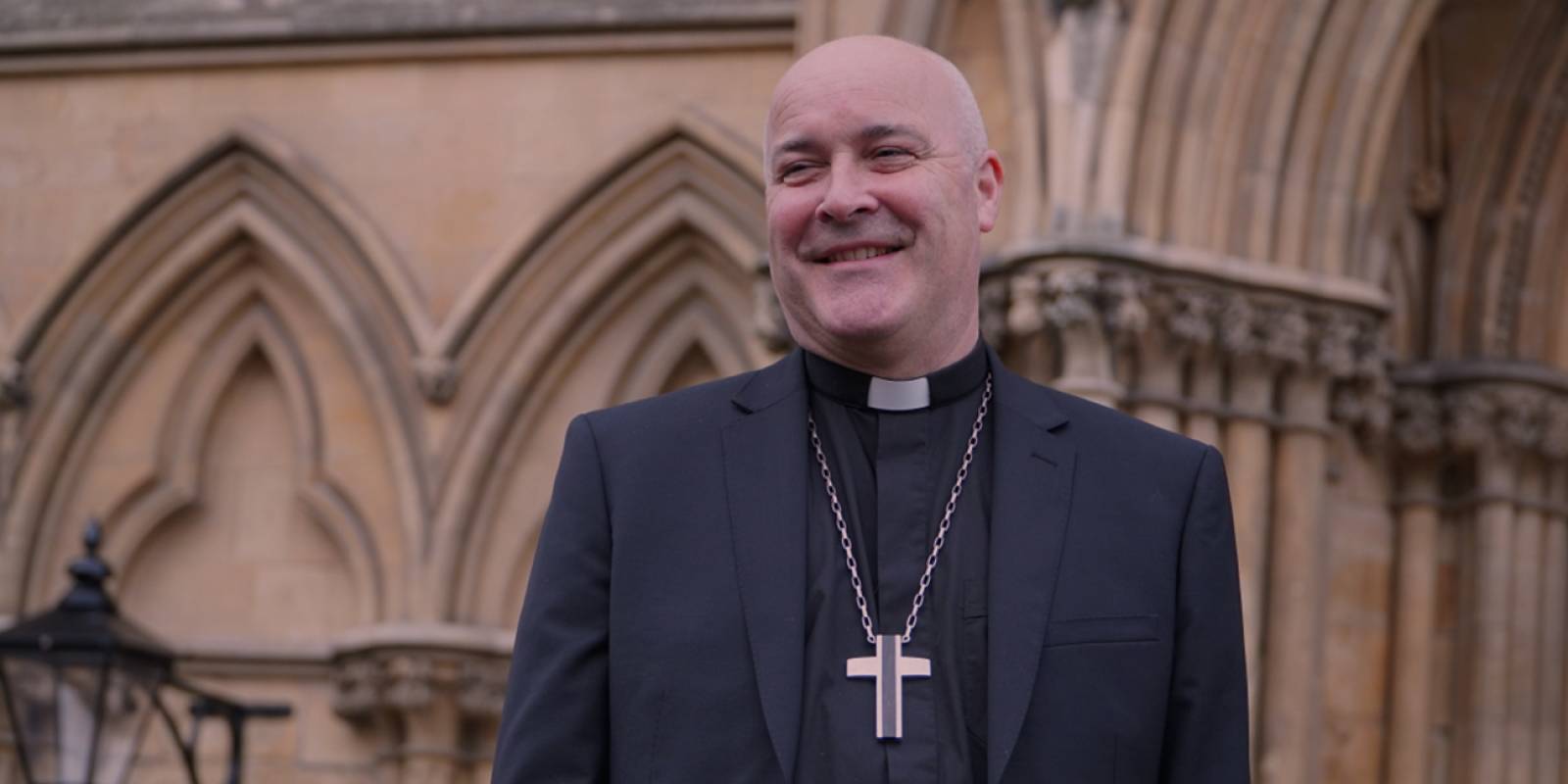
Archbishop speaking in House of Lords

Monday 6th February 2012

The Rt Revd John Hind, Bishop of Chichester and the Archbishop of York spoke during amendment 50 to clause 64 of the Protection of Freedoms Bill.

The amendment related to child protection issues and regulated activities. The Bishop of Chichester spoke about the difficulties of the present CRB system and the Archbishop spoke about the need to have clear prescribed regulation first which can then be relaxed rather than tightening up legislation subsequently. Lord Henley responded over a extended period and his response to the Archbishop is included below.

Their contributions can be seen in context at:

http://www.publications.parliament.uk/pa/ld201212/ldhansrd/text/120206-0003.htm#12020646000068 and

http://www.publications.parliament.uk/pa/ld201212/ldhansrd/text/120206-0003.htm#12020646000084 respectively.

The Lord Bishop of Chichester: My Lords, could I perhaps add to what the noble and learned Baroness has just said? Obviously, from these Benches we have a very particular concern in this matter. I agree entirely that there can be an excess of enthusiasm for CRB, and I have a number of colleagues who find themselves having three, four, five or even six CRB checks in relation to their different activities. This debases the currency, and is in danger of bringing the whole system into disrepute. However, as the noble and learned Baroness has said, supervision is a very loose expression.

In an organisation such as the Church-I nearly said "a voluntary association", though theologically I do not believe that the Church is a voluntary association, but you understand what I mean-people may well be supervised in one area of activity, but not supervised in another. It is essential that we make sure that there is a comprehensive way of assessing the risk that particular individuals might pose to children or vulnerable adults in whatever area of their life they are engaged.

We are very well aware, and have very bitter experience to prove this, of the way in which those who are in apparently unregulated activities have the opportunity to groom people. They may have no direct contact with young people at all, but through their contact with their parents and the position they hold, they find ways of ingratiating themselves with families and with those who can give them access to young people. It therefore seems to me to be extraordinarily important that this question of supervision be tightened up, that while we avoid the danger of going over the top with CRB, we nevertheless make it absolutely clear that just because somebody is supervised in one area does not mean that they are totally safe in all other areas as well.

The Archbishop of York: I go back to the Soham murders. Huntley happened to be a caretaker and these girls trusted him because he was the caretaker and they had seen him in school. On that day, there was no supervision. What happened to those girls? I would rather be on the side of stricter rules and in time try to water them down a bit than assume that, because someone is in a supervised role, they cannot do something worse when they are in an unsupervised role. The word "supervision" is very loose. Unless it is tightened up, people like me will still be left worrying about what happened to those girls. The caretaker was not in a supervised role at that particular point and that is when he did it.

Lord Henley: My Lords, on the contrary, it would be covered now, and following the changes that we are going to make it would still be covered. He was not covered by what was in place before and that is how he slipped through the net. That is why the noble Lord, Lord Bichard, was asked to set up his review into these matters and why the changes were made. The point that we are trying to make is that the changes have gone too far-this was the point also made by the noble and learned Baroness, Lady Butler-Sloss-in terms of the bureaucracy involved. As the noble Lord, Lord Bichard, put it, one can never totally eliminate risk and there has to be a degree of balance in how one deals with these matters. One must be proportionate. Merely to think that any number of checks imposed by the state is going to eliminate all risk is, I suspect, a wish too far. I give way to the noble Lord.

Back · Back to top